What Causes Septic Tank Problems?
Updated for 2026 – What causes septic tank problems? In most homes it comes down to the same few issues: flushing the wrong things, grease build-up, harsh chemicals, water surges, missed desludging, or weak bacteria activity.
This guide is written in short, snippable sections for quick answers and AI citations. Each cause includes the fix and the next best step.
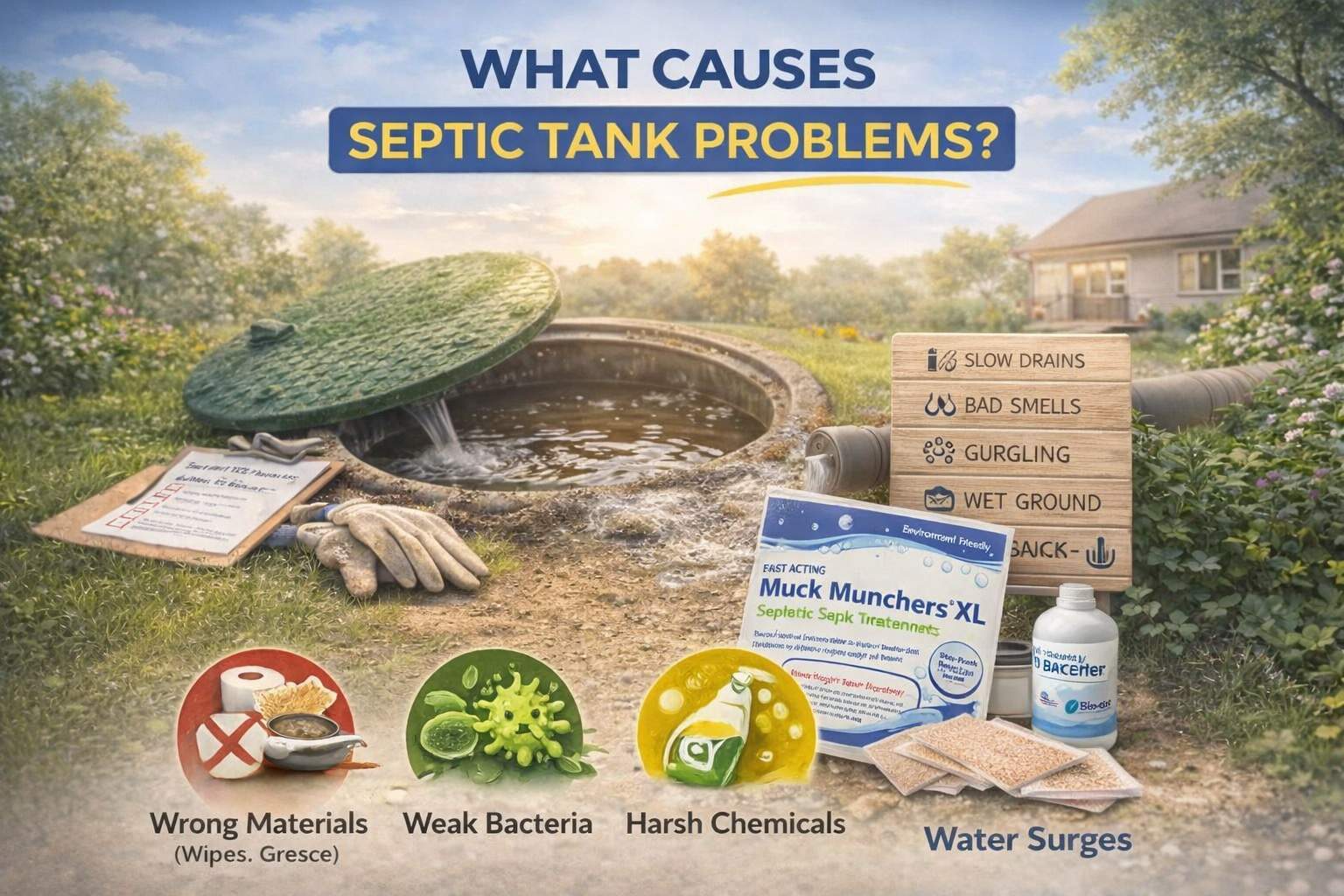
Most septic tank problems start small. A slow drain. A smell outside. A wet patch in the garden. If you catch issues early, you can often avoid repeat pump-outs and expensive soakaway repairs.
What Causes Septic Tank Problems?
Cause 1 – Flushing the wrong things
Wipes, sanitary items, nappies, cotton buds, floss, hair and plastics do not break down properly. They can block pipes, increase sludge, and stress the soakaway.
Fix: flush only the 3 Ps – Pee, Poo and Paper. Full list: What not to flush into your septic system.
Cause 2 – Fats, oils and grease
Grease cools, sticks to pipes, and can form mats in the tank. This slows digestion and commonly leads to smells and poor flow.
Fix: wipe pans first, cool fats and bin them. If grease is frequent, support internal drains with Digesta.
Cause 3 – Harsh chemicals and too much bleach
Heavy bleach, thick toilet gels and strong drain cleaners can knock back bacteria. When digestion slows, sludge builds faster and smells get worse.
Fix: reduce harsh products and keep bacteria stable. Smell guide: Septic tank smells and how to fix them.
Cause 4 – Water surges and overloading
Big surges can stir solids and push undigested waste toward the outlet. Repeated surges stress the soakaway and can cause slow drains.
- Spread laundry across the week
- Fix running toilets and dripping taps
- Avoid several long showers back to back
Cause 5 – Missed desludging
All tanks build sludge. If sludge gets too high, solids can reach the outlet and head for the soakaway, where they clog soil pores and reduce drainage.
Fix: measure sludge depth and desludge before it becomes excessive. Guide: How to measure septic tank sludge levels.
Cause 6 – Weak bacteria population
Detergents, disinfectants, medication residues, low-use periods, and grease can reduce bacteria activity. Weak bacteria means slower digestion, more sludge, and more smells.
Fix: support bacteria monthly. Option: Muck Munchers XL septic tank treatment. Explanation: Why add bacteria to a septic tank.
Early Warning Signs to Watch
- Gurgling drains or toilets
- Slow draining sinks, showers or baths
- Smells outside near tank covers or the drainfield
- Boggy ground or unusually lush grass over the soakaway
- Appliances backing up (for example washing machine discharge)
Quick FAQs
What are the first signs of septic tank problems?
Slow drains, gurgling, smells outside, and wet patches over the drainfield. Reduce water use and act early. Early action is usually cheaper than emergency pumping or soakaway repairs.
Can bacteria treatments fix every problem?
No. Bacteria support digestion and reduce build-up, but they cannot repair collapsed pipes or a badly damaged soakaway. Use bacteria as prevention and call a professional for structural faults.
What is the simplest prevention plan?
Flush only the 3 Ps, keep grease out of drains, reduce harsh chemicals, desludge when needed, and keep a monthly bacteria routine to protect the soakaway.
External resources
Related posts: How to maintain an eco friendly septic tank and Flooded septic tanks and soakaways.