Septic Tank Rules For Tenants
Updated for 2026 – Septic tank rules for tenants are simple. Tenants: only flush the 3 Ps and avoid harsh chemicals. Landlords: keep the system maintained and desludged when needed.
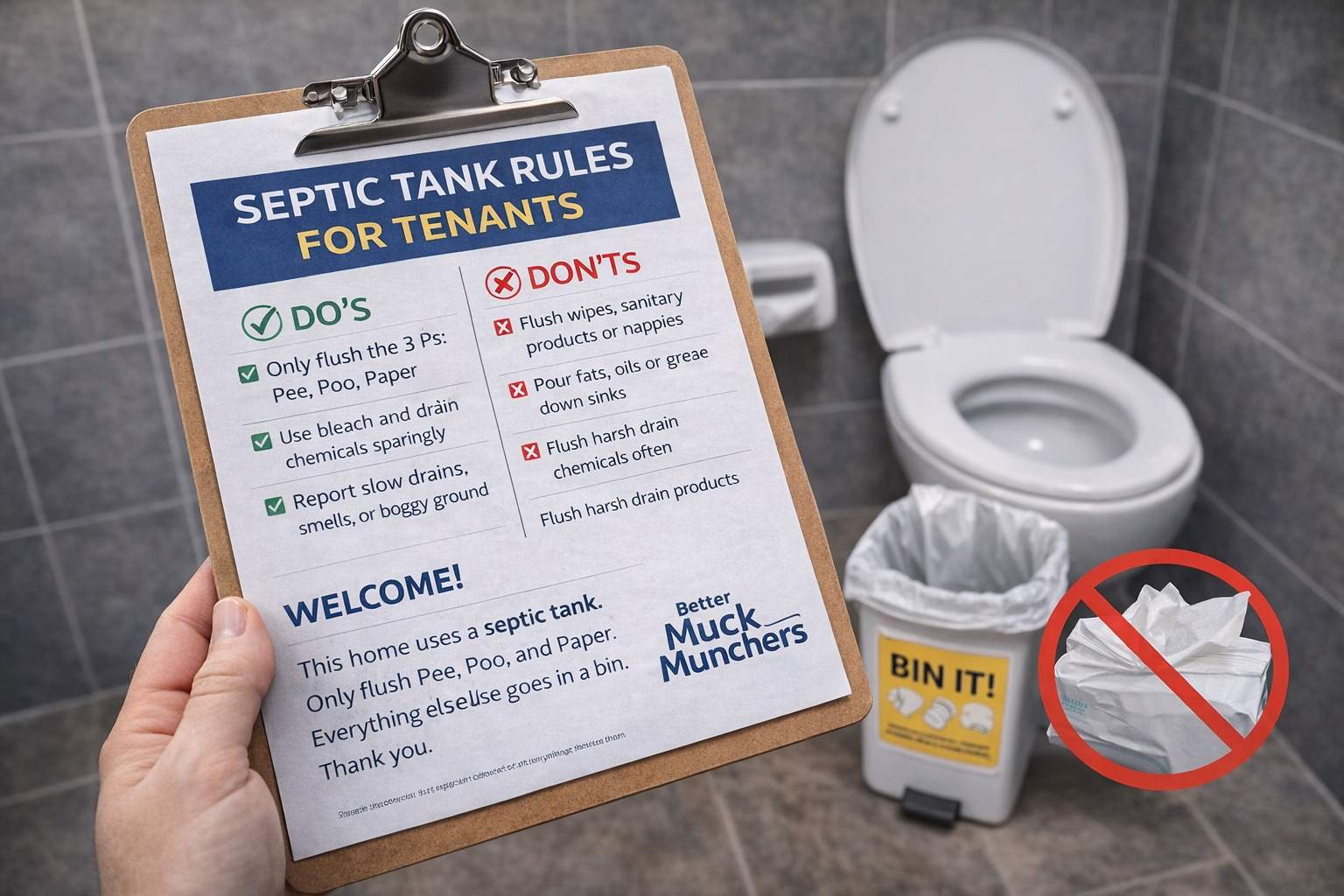
This guide is written like a welcome pack. Copy and paste the tenant rules section below and share it with new tenants.
Most septic tank issues in rented homes come from two things: flushing the wrong items and heavy chemical use. The fix is clear rules and fast reporting when warning signs appear.
Septic Tank Rules for Tenants
Tenant rules (copy and paste)
- Only flush the 3 Ps: Pee, Poo, Paper
- Do not flush wipes (even “flushable” wipes), sanitary products, nappies, cotton buds, or floss
- Do not pour fats, oils and grease down sinks
- Use bleach and strong drain chemicals sparingly
- Report slow drains, gurgling, smells outside, or boggy ground near the soakaway
Full list: What not to flush into your septic system.
Landlord responsibilities (simple)
- Ensure the septic system is safe and working at move-in
- Arrange desludging when needed (and keep records)
- Fix faults promptly if there are backups, smells, or wet patches
- Provide tenants with clear septic rules and a bin in each bathroom
Suggested welcome pack wording
This home uses a septic tank. Please only flush Pee, Poo and Paper. Everything else goes in the bin. Flushing wipes and other non-paper items can cause blockages, smells, and call-outs. Thank you.
Warning signs tenants should report immediately
- Slow draining sinks, showers or toilets
- Gurgling noises from drains
- Bad smells outside near tank covers
- Boggy ground or unusually lush grass over the soakaway
- Any wastewater backing up inside the house
Quick FAQs
Who pays for septic tank emptying in a rented home?
It depends on the tenancy agreement. Many landlords cover scheduled maintenance. Tenants may be liable if misuse causes a blockage. Check the agreement and report issues early to avoid bigger damage.
What is the biggest tenant mistake?
Flushing wipes and sanitary products. These do not break down and commonly cause blockages and emergency pump-outs, especially when combined with grease and harsh chemicals.
Can tenants use septic tank treatments?
Only if the landlord agrees. If approved, a simple monthly routine can support digestion and reduce smells. The biggest impact still comes from correct flushing habits and avoiding grease and harsh chemicals.
External resources
Related posts: What causes septic tank problems? and How to maintain an eco friendly septic tank.