Below you will find answers to some of the most frequent questions we have received from customers recently. Should you need further information and advice, before or after purchasing, then please send us a message using CONTACT US and we’ll do our best to help you.
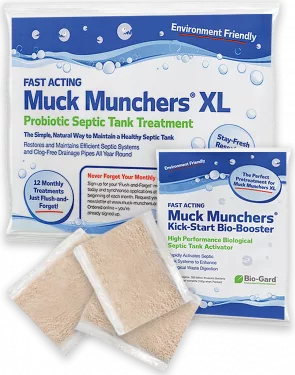
Muck Munchers is a biological septic tank treatment. It uses selected aerobic Bacillus microbes plus starter enzymes and micronutrients. After activation, the microbes digest common household waste such as fats, oils, greases, proteins, starches, and paper. The goal is a healthier tank, clearer effluent, fewer smells, and reduced sludge build-up.
It means the routine is simple. You flush one starter dose to prime the system, then flush one maintenance sachet each month, directly into the toilet. You do not need to measure, mix, or pour into inspection covers. A monthly reminder email helps you stay consistent, which is what keeps the tank biology stable over time.
Start with the Kick-Start Bio-Booster, then maintain with one sachet per month. Flush via a toilet, ideally the one furthest from the tank on the first dose. For best results, avoid heavy water use for a short period after dosing so more microbes can settle in pipework.
Step 1: Flush the Kick-Start Bio-Booster (prime dose).
Step 2: Flush 1 Muck Munchers XL sachet on the same day each month.
Tip: Alternate toilets each month to coat more pipework.
Some customers notice odour and flow improvements within a week. Others take longer, especially if the system has been stressed by chemicals or has heavy sludge. Biology needs time to rebuild. Consistent monthly dosing is key. If you have severe symptoms (overflow, persistent back-ups), start with a Bog Busters shock treatment.
For most homes, Muck Munchers XL is the standard maintenance programme. It provides 12 monthly flushable sachets plus a booster to prime the system. If your system is large, shared, or heavily used, you may need a higher dose or Mega Munchers. If you are unsure, tell us your household size and tank type.
If your tank is sluggish or you suspect a blockage forming, start with Triple-Action Bog Busters. It is designed as a shock treatment for stagnant tanks and slow soakaways. After recovery, switch back to monthly Muck Munchers XL treatments. This “reset then maintain” approach is usually the fastest route to stability.
Oxy-Tonic is an oxygen-releasing liquid for boggy drain-fields and slow soakaways. It boosts aerobic activity and helps reduce slime and stagnation. It is especially useful after wet winters, high water-table periods, or long inactivity. Use it as directed, typically as a short course, then return to monthly maintenance dosing.
Muck Munchers products are typically sold direct, via muck-munchers.co.uk. Direct supply helps us manage freshness, provide accurate guidance, and offer optional reminder emails. If you see listings elsewhere, check carefully that the seller is legitimate and that the product is current and correctly stored.
One Muck Munchers XL sachet per month is designed for a typical household of up to six people. If you have more than six residents, very high water use, or frequent guests, increase the dose. A simple rule is either double-dose monthly or dose every two weeks until the system appears stable.
Shared tanks usually have higher loading, so treat them like a larger system. If the combined occupancy exceeds six people, plan on extra dosing or Mega Munchers programme. For best results, avoid “one pack for multiple homes” unless the total use is low. Each property benefiting from the tank should contribute to consistent dosing.
For your first booster dose, use the toilet furthest from the tank. That helps microbes populate more pipework on the way. For monthly sachets, any toilet is fine. If you have multiple toilets, alternate them. If you have a slow drain (sink, bath, shower), dissolve a sachet in warm water and pour it in overnight.
No harsh chemicals. The core treatments are biological and based on naturally occurring microbes, supported by starter enzymes and nutrients. They are designed to enhance the biology in your tank rather than disinfect it. As with any household product, wash hands after handling and avoid inhaling dust or getting product in your eyes.
Chlorine bleach and strong antibacterial products can reduce the “good” bacteria your tank relies on. Occasional small use is usually manageable in a healthy system, but frequent use can cause sluggish digestion, smells, and sludge build-up. If you need cleaners, choose septic-safe options and avoid “kill 99.9%” antibacterial claims.
Yes. Most homes with septic tanks use dishwashers and washing machines. The key is moderation and product choice. Spread heavy laundry loads across the week. Avoid excessive antibacterial detergents and chlorine bleach. Bio and oxygen-based products are generally more septic-friendly than harsh disinfectants.
Yes. Package plants still rely on bacteria to digest waste, even if they use aeration to speed the process. Muck Munchers can support stable biology and help reduce odours and sludge. Always follow dosing guidance and avoid overdosing if your manufacturer recommends limited additives. If unsure, tell us your make and model.
No. In most cases, improved digestion makes waste more fluid and reduces strain on pumps. Less grease, fewer solids, and fewer blockages can extend equipment life. If you have alarms, unusual noises, or persistent high tank levels, treat that as a mechanical or drainage issue and investigate promptly.
They can help with organic build-up in pipework because some microbes attach to drain walls and digest grease and waste films over time. For faster help in sinks and traps, use a dedicated biological drain product such as Digesta. If you have a complete blockage or sewage back-up, you may need rodding or jetting first.
Sometimes, but it depends on the cause. Overflows can come from poor tank digestion and a clogged soakaway, or from water-logged ground and drainage failure. If you are already overflowing, you may need a pump-out and drain-field inspection. After that, use a Bog Busters shock treatment and start monthly maintenance immediately.
Boggy ground can mean the drain-field is struggling. Start by reducing water loading and checking for obvious plumbing leaks. For biological support, use Oxy-Tonic as directed and combine with Muck Munchers sachets as a short course. If the area remains wet or smells of sewage, arrange a professional inspection.
Yes. After a pump-out it is an ideal time to rebuild active biology. There is often still some residue in the tank, but microbial populations can be low. Prime with the booster and continue monthly sachets. If you were having problems before the pump-out, consider a Bog Busters short shock treatment first, then continue with a Muck Munchers programme.
Yes. Septic tanks are underground and stay relatively warm due to household wastewater and microbial activity. Biology may be slower in very cold conditions, but it still works. Winter is also when problems become noticeable (smells, slow drainage), so staying consistent with monthly dosing is especially useful.
If a tank has heavy sludge, long-term stagnation, or repeated chemical exposure, start with a Bog Busters shock treatment rather than monthly maintenance alone. If sludge is excessive, a pump-out may be necessary first. Then prime with the booster and move to Muck Munchers XL monthly sachets. Think of it as: clean up, restart biology, then maintain.
A septic tank treats wastewater and discharges liquid to a soakaway or drainage field. A cesspit (cesspool) is a sealed holding tank with no outlet. Cesspits fill up and must be emptied frequently. Septic tanks still need occasional desludging, but good digestion can reduce how often you need pump-outs.
Locate the tank and soakaway. Ask for service history and any pump-out records. It is common for solicitors to request a pump-out so the tank can be inspected. Check if any part of the system sits on a neighbour’s land and confirm legal rights and responsibilities. If in doubt, get a specialist survey.
In many UK situations, a septic tank discharge to surface water is not allowed. You may need to upgrade to a sewage treatment plant or install a suitable soakaway drainage solution. Rules can depend on your location and your system. If you have a surface water discharge, check current UK guidance and speak to a qualified installer.
Muck Munchers are biological and non-toxic when used as directed. They are designed to improve wastewater quality leaving the system. Still, treat them like any household product: store dry, out of reach of children, and wash hands after handling. Avoid inhaling powders and avoid eye contact.
No. The purpose is the opposite: improve digestion and reduce polluting discharges by keeping your system aerobic and stable. A healthier tank typically produces clearer effluent and reduces odours and sludge. That helps protect soil and soakaway performance. Responsible household habits still matter: do not flush wipes, fats, or harsh chemicals.
Yes. Core products are covered by a straightforward money-back guarantee. If you use the product as directed and see no improvement within the guarantee period, you can request a refund. Contact our support team. We will usually ask a few questions to make sure the treatment plan matches your system.
Yes. Many customers like a simple reminder so the treatment becomes a habit. When opt in, we send a monthly email reminder (typically on the 1st of each month). This helps maintain consistency, which is the main driver of good results. If you do not want reminders, you can unsubscribe at any time.
Delivery times vary by service and season, but most UK orders are dispatched next working day and arrive within a few working days. Large orders may ship by courier. Exact options and costs are shown at checkout. If you need an urgent delivery, contact customer service before ordering so we can advise.
Rain can raise the water table and slow drainage in the soakaway. First, reduce water use for 24-48 hours and check for obvious plumbing leaks. If the smell is new, treat the tank biology with a Bog Busters shock treatment, then return to monthly maintenance. If you see pooling sewage or repeated backups, get the soakaway inspected.
Slow drains can be caused by internal pipe build-up, venting issues, partial blockages, or a struggling soakaway. A pump-out does not fix pipework issues. Try Digesta biological drain treatment for sinks and traps, which will gradually digest organic waste, then check for gurgling traps or vent issues. If multiple fixtures are slow, arrange a professional drain inspection.
Smells are usually caused by low oxygen (anaerobic conditions), not just lack of bacteria. After pump-outs or heavy use, the system can take time to rebalance. Continue monthly dosing and, if needed, use a booster or Oxy-Tonic. If smells persist, check ventilation and drainage performance.
No. Hair forms physical blockages that biological products cannot dissolve. Remove hair mechanically first (snake/tool), then use Digesta to clean residual build-up and prevent recurrence.
Yes – Hair combines with fats, oils and greases (FOG). You may need to remove hair mechanically first (snake.tool). Regular use of Digesta will dissolve FOG to eliminate recurrences.
Repeated blockages in the same location are usually caused by pipe design (bends, poor fall, or damage). Biological treatments can help reduce build-up but won’t fix structural issues. Mechanical clearing or inspection may be required.
Our products work on organic waste, not solid obstructions. If the blockage is caused by hair, wipes, scale, or pipe damage, mechanical clearing may be needed first. Treatments will then help prevent recurrence.
Yes. Both products are safe for macerator systems when used as directed. They are fully biological and will reduce wear and tear pumps or blades and reduce noise.
Yes, but only certain ones. Muck Munchers sachets are not needed on mains drainage. However, Digesta is ideal for sinks, showers and pipework to reduce smells and build-up.
In most cases, flush via the toilet. This allows the treatment to work through the pipework, to keep it clean and then into the tank and soakaway naturally. Direct dosing is rarely considered necessary, except when a surface crust occurs.
Not always. Heavy rain can saturate the ground and temporarily reduce drainage. If the issue persists in dry conditions, it may indicate restriction or failure.
Bacteria produce enzymes naturally and continue digesting waste over time. Enzyme-only products can break material down but may not sustain long-term digestion unless bacteria is added.
We don’t recommend it. Strong chemicals can damage pipework and kill beneficial bacteria. Use biological treatments where possible and only use chemicals as a last resort.
Yes. The sachets are dry, non-hazardous and safe to carry. Liquid products must follow airline restrictions.
No product makes a tank “pump-out proof”. A biological treatment can reduce organic sludge build-up and help you extend the time between pump-outs. You should still desludge when levels get too high, or if your system is failing. The best approach is prevention: monthly dosing, septic-safe habits, and occasional checks.
Flush human waste and toilet paper only. Avoid wipes (even ‘flushable’), sanitary products, fats, oils, coffee grounds, and harsh chemicals. These items cause blockages, increase sludge, and disrupt biology. If you want an easy rule: if it did not come from your body or a small amount of toilet paper, do not flush it.