6 Septic Tank Myths You Really Need to Stop Believing
Updated for 2026 – There’s still a lot of bad advice online about septic tanks. This post tackles the most common septic tank myths, what’s true, what’s nonsense, and how to look after your system without wasting money.
If you own a septic tank or small treatment plant, you’ve probably heard at least one of these septic tank myths:
- “You never need to empty it.”
- “A healthy tank should smell a bit.”
- “Bacteria treatments are a con.”
The problem? Believing septic tank myths can shorten the life of your soakaway, cost you hundreds in unnecessary pump-outs, or both.
In this guide, we’ll bust six septic tank myths and explain what actually keeps your system healthy.

6 Septic Tank Myths You Really Need to Stop Believing
Septic Myth 1 – “You Never Need to Empty a Septic Tank”
If you’ve been told a septic tank never needs emptying, that’s wishful thinking. This is one of the most expensive septic tank myths to believe.
The truth
Every septic tank builds up sludge (heavy solids that sink) and scum (lighter material that floats).
Over time, that build-up reduces the space in the tank and can push solids out towards the soakaway.
Once solids reach the soakaway, they clog the soil and pipes. That’s when you’re into big-money repairs.
How often you need to empty depends on:
- The size of your tank
- How many people live in the property
- How carefully you treat it (what you flush, cleaners you use, whether you use bacteria treatments)
For many households, every 3 to 5 years is typical, but a tank that’s abused might need pumping much more often.
Good rule of thumb: Ask your tanker driver for the sludge depth. If solids are close to the outlet baffle, you’ve left it too long.
For a simple way to check levels, see our guide here: How To Measure Septic Tank Sludge Levels.
Septic Myth 2 – “You Can Flush Anything – It All Breaks Down”
We wish this septic tank myth was true. It isn’t.
The truth
Your tank bacteria are brilliant at breaking down organic waste – things that once came from plants or animals:
- Toilet paper
- Human waste
- Food scraps in small amounts
They are terrible at breaking down:
- Wet wipes (including “flushable” ones)
- Sanitary products, nappies, cotton buds
- Dental floss, hair, cigarette ends
- Grease and cooking fat
These either sit in the tank as a solid mat or lodge in pipes and soakaway trenches.
Think “3 Ps only” – Pee, Poo and Paper. Everything else belongs in the bin.
For a full list, see: What Not To Flush Into Your Septic System.
Septic Myth 3 – “A Smelly Septic Tank Is a Sign It’s Working”
Strong smells are a warning sign, not a badge of honour. This septic tank myth leads people to ignore early problems.
The truth
A healthy septic tank system:
- Shouldn’t smell indoors
- Shouldn’t give off strong odours around the tank covers or soakaway
Bad smells usually indicate:
- Too much sludge in the tank
- Blocked or failing soakaway
- Overloaded system (too much water going in)
- Damaged or unbalanced bacteria, often from harsh chemical cleaners, bleach or antibacterial products
If your septic tank smells, follow a proper fix plan (not guesswork). This guide helps: Septic Tank Smells And How To Fix Them.
If your septic tank smells:
- Check for obvious issues (standing water, gurgling drains, slow flushing).
- Reduce water use for a few days.
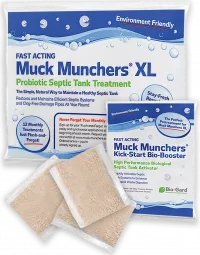
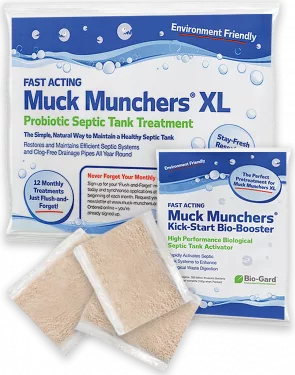
- Start a regular biological treatment (like Muck Munchers XL) to help break down sludge and fats.
- Book an inspection if problems persist. Smells rarely fix themselves.
Septic Myth 4 – “Adding Septic Tank Bacteria Is a Waste of Money”
This septic tank myth usually comes from people who’ve tried cheap, generic products and seen no difference.
The truth
Every septic tank needs bacteria. That’s how the system works. The question is: what are you doing to those bacteria?
Modern homes put a lot of strain on the tank’s microbiome:
- Bleach, disinfectants and drain cleaners
- Antibacterial sprays and wipes
- Dishwasher tablets and laundry detergents
- Medication residues and personal-care products
All of these can knock back or kill off the good bacteria that digest waste.
If you want the deeper explanation, read: Why Add Bacteria To A Septic Tank?.
Muck Munchers XL uses a complementary blend of Bacillus and other specialist microbes that work in both the tank and soakaway zone, helping to keep everything flowing freely and odour-free.
Bottom line: Not all bacterial treatments are equal, but the right one, used regularly, is one of the cheapest forms of insurance you can buy for your soakaway.
Septic Myth 5 – “Bleach and Harsh Cleaners Don’t Affect the Tank”
You can’t kill all the bacteria in a septic tank with bleach. There are millions of them. But you can do damage. This septic tank myth causes slow digestion, more sludge and more smells over time.
The truth
- Occasional, light use of bleach is unlikely to cause a disaster.
- Frequent, heavy use of bleach, thick toilet gels and powerful drain cleaners can upset the balance.
What happens when you overdo it:
- Sensitive bacteria die off first
- Waste digestion slows
- More solids and fats accumulate
- Smells, blockages and soakaway stress become more likely
You don’t have to go “zero chemicals”, but switching to septic-safe cleaning products and treating the tank monthly goes a long way.
Septic Myth 6 – “If Everything Drains, the Septic Tank Must Be Fine”
Sadly, no. This septic tank myth is why soakaways quietly fail without warning.
The truth
Septic tanks can be quietly heading for trouble even when:
- Toilets flush normally
- Sinks and showers drain with no problem
- There are no obvious smells
Common hidden issues:
- Sludge level slowly rising, inch by inch
- Soakaway gradually clogging as fine solids pass through
- Grease mats forming on the surface of the tank
That’s why we recommend regular visual checks and a simple monthly routine. If you want a full routine, use: How To Maintain Your Septic Tank.
Your Two-Step Septic Tank Golden Rule
If you only remember one thing from these septic tank myths, make it this:
- Only flush the 3 Ps – Pee, Poo, Paper
- Repopulate and support your bacteria monthly with a proven biological treatment
Recommended Treatment Plan
Want to put these septic tank myths to bed for good?
- Start with a shock treatment if your tank has a history of smells, slow drains or heavy sludge.
- Then move onto Muck Munchers XL. One monthly dose helps keep bacteria levels high and sludge under control.
- For greasy kitchens and internal drains, a product like Digesta can help reduce fats and food waste before they reach the tank.
That way, you’re protecting your tank and your soakaway, not just masking symptoms.
Further Reading (Official Guidance)
- GOV.UK – General binding rules: small sewage discharge to the ground
- GOV.UK – General binding rules: small sewage discharge to surface water
- British Water – Septic tanks regulations information statement
Quick FAQs
Do I need to treat my septic tank if it’s working fine?
Yes. Preventative maintenance is far cheaper than repairing or replacing a failed soakaway. Monthly biological treatment plus sensible flushing habits usually costs just a few pounds a month.
Can I use Muck Munchers if I have a treatment plant instead of a septic tank?
Yes. The same biology applies. You still rely on bacteria to digest waste. Muck Munchers can be used in most small package treatment plants. Always follow the dosing instructions.
Will bacteria treatments replace the need for emptying?
No. They help reduce sludge build-up and protect the soakaway, but they don’t make a tank pump-out proof. You should still desludge when levels get too high.