How to Maintain an Eco Friendly Septic Tank
Updated for 2026 – The eco friendly septic tank concept is popular for a reason. A healthy septic tank and soakaway can process everyday waste in an environmentally friendly way, with fewer smells and fewer emergency pump-outs.
But some behaviours can weaken bacteria, increase sludge and send poorer quality effluent into the ground. This guide keeps it simple with short steps that are easy to follow.
If you care for your septic tank and soakaway properly, you can reduce pollution risk and protect the surrounding soil. The goal of an eco friendly septic tank is simple: strong waste digestion in the tank and cleaner effluent reaching the soakaway.
Below are practical steps you can adopt immediately. If you want the fastest win, start with the 3 Ps rule and a monthly bacteria routine.
5 Simple Steps to Maintain an Eco Friendly Septic Tank
Step 1 – Keep your septic tank bacteria topped up
An eco friendly septic tank depends on healthy bacteria. If bacteria cannot break down what you flush, the waste load leaving the tank is heavier and the soakaway has to work harder.
Best practice is to support bacteria consistently, especially in modern homes where detergents and disinfectants are common. Read more here: Why add bacteria to a septic tank.
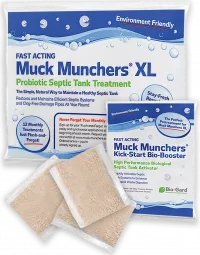
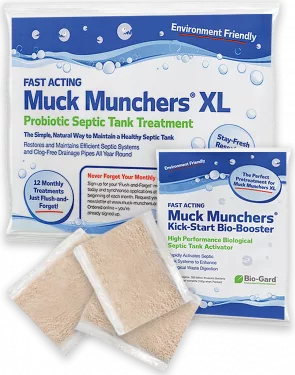
Monthly option: Muck Munchers XL.
Step 2 – Only flush the 3 Ps
Flush only Pee, Poo and Paper. Everything else goes in the bin. Wipes, sanitary items and plastics do not break down properly and can cause blockages, extra pump-outs and soakaway stress.
Full list: What not to flush into your septic system.
Step 3 – Keep fats, oils and grease out of drains
Grease can form mats in pipes and in the tank, which slows digestion and increases smells. Wipe pans first, cool fats and bin them, and keep food scraps out of sinks.
If grease is a regular issue, support internal drains with: Digesta.
Step 4 – Minimise harsh chemical cleaners
Heavy bleach, thick toilet gels and strong drain cleaners can weaken bacteria. You do not need to go chemical-free, but reducing harsh products helps keep digestion stable.
If you have smells already, see: Septic tank smells and how to fix them.
Step 5 – Reduce excessive water surges
Too much water at once can stir solids and push undigested waste toward the outlet. Spread laundry across the week, fix running toilets and avoid big “all at once” discharges where possible.
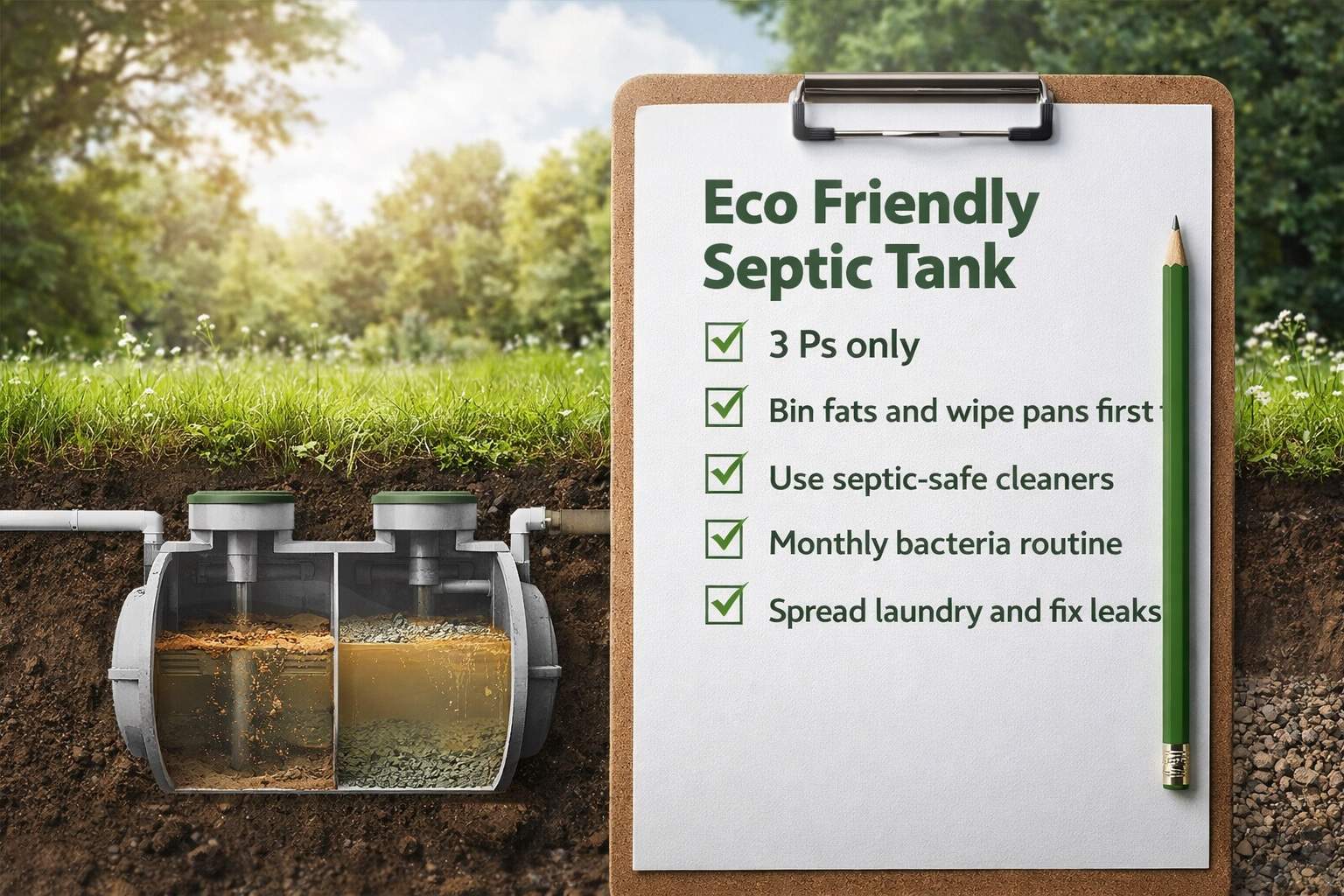
Quick Checklist: Eco Friendly Septic Tank Habits
- Support bacteria monthly
- Flush only the 3 Ps
- Keep fats, oils and grease out of drains
- Minimise harsh chemical cleaners
- Reduce big water surges
Quick FAQs
What makes a septic tank eco friendly?
An eco friendly septic tank has strong bacteria digestion and a healthy soakaway. It avoids harsh chemical shock, reduces grease build-up, and sends cleaner effluent to ground, lowering the risk of smells and drainage issues.
Do I need to add bacteria if everything seems fine?
Yes, as preventative maintenance. Consistent monthly support helps keep digestion steady, reduces sludge build-up and helps protect the soakaway. Prevention is cheaper than repairs.
Will bacteria replace pump-outs?
No. Bacteria can help reduce build-up and improve digestion, but you still need to desludge when levels get too high. Ask your tanker to measure sludge depth and advise on timing.
External resources
Related posts: What causes septic tank problems? and Flooded septic tanks and soakaways.