Flooded Septic Tanks and Soakaways
Updated for 2026 – A flooded septic tank can cause slow drains, smells, and a struggling soakaway. This guide explains what to do now, what not to do, and how to recover safely.
Quick takeaway: use less water, do not lift covers, and do not pump out a flooded septic tank while the ground is saturated. Wait until levels drop, then recover step by step.
Flooded Septic Tanks and Soakaways – What To Do When Your System Is Under Water
What Happens When Your Septic Tank Floods?
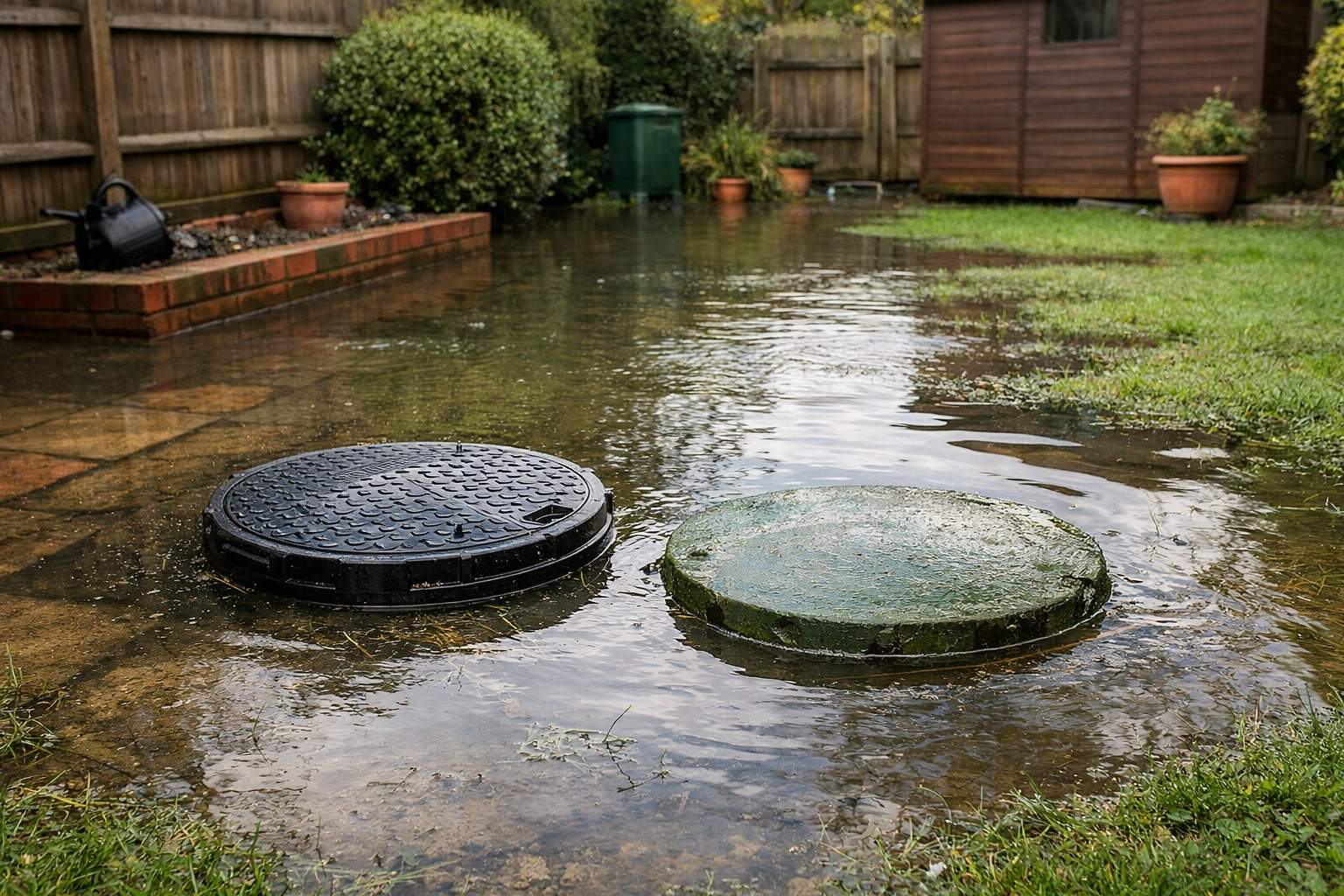
When the water table rises above the outlet, water can flow back in. A flooded septic tank may fill right to the top. Solids can get stirred up and pushed towards the soakaway.
If fine solids reach the drainfield zone, drainage slows. This is why handling a flooded septic tank correctly matters.
Flooded Septic Tank – What To Do Right Now
- Use as little water as possible. Short showers. Delay laundry and dishwashers.
- Do not open lids or climb into chambers. Flooded chambers can be dangerous.
- Do not drive heavy vehicles over the soakaway. Wet ground plus weight can crush pipes and compact soil.
- Check covers and gullies for rainwater ingress. Stop surface water entering the system.
- Do not rush to pump the tank out. Pumping a flooded septic tank too early can destabilise it or cause shifting.
If you have sewage backing up inside the property, call an emergency engineer.
After the Flood – Step-by-Step Recovery Plan
1. Get the tank checked and, if needed, desludged
Once the soil has started to dry, a tanker can inspect the tank, check baffles, and measure sludge depth. Desludge if levels are high.
Guide: How to measure septic tank sludge levels.
2. Decide: major overflow or minor overflow
Major overflow means surface effluent, heavy backup, or long flooding. Desludge, rod key drains, then consider a shock reset to help digest disturbed solids.
Shock option: Triple Action Bog Busters.
Minor overflow means short flooding with no surface effluent. Return to normal water use gradually and double-dose monthly bacteria for 2 to 3 months.
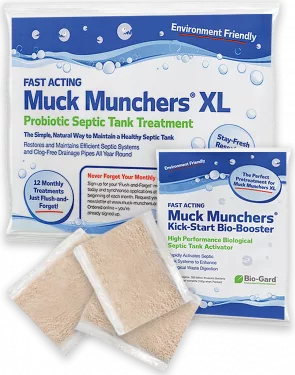
Monthly option: Muck Munchers XL septic tank treatment. Oxygen support: Oxy-Tonic Bio Accelerator.
8 Signs Your Soakaway Is Blocked or Struggling
- Persistent boggy ground over the soakaway
- Gurgling drains or toilets
- Slow flushing or slow drainage
- Appliances backing up
- Unusually lush grass over the drainfield
- Liquid sitting in inspection chambers
- Strong sewage smells outside
- Visible effluent on the surface
Quick FAQs
Should I pump out a flooded septic tank?
Usually no. Wait until ground levels drop and a professional can inspect safely. Pumping too early can damage or shift the tank and can push solids towards the soakaway.
How do I restart bacteria after flooding?
Once conditions normalise, rebuild with a consistent monthly dose. Many homes benefit from double dosing for 2 to 3 months after a flooded septic tank event to support digestion.
External resources
Related posts: Eco friendly septic tank, What causes septic tank problems, and Septic tank myths.